Launching soon. CAI-1 “AI Foundations” will be free, for everyone. Launching soon · CAI-1 is free See the credential ladder →

When everyone uses AI, the only honest test is what you make with it.

Certavant exists because the way we certify skill broke — and no amount of new content fixes an old idea of what a test is.

AI changed what competence looks like. Certification didn’t keep up.

The work changed overnight. A marketer briefs a campaign with an AI in the loop. An analyst cleans a messy dataset by delegating to a model and checking its work. A support lead audits what a bot told a customer. The valuable skill is no longer doing every step by hand — it’s directing AI well, catching where it’s wrong, and taking responsibility for the result.

Certification never caught up. Most credentials still measure attendance: watch the videos, answer some multiple-choice questions, collect a certificate that proves you were present. That was a weak signal before AI. Now it’s close to meaningless — a multiple-choice test can’t see whether you can produce the work, and the answers are one prompt away regardless.

So the industry’s instinct is to ban AI from the exam and proctor it out. But that tests a fantasy. Nobody does the job with AI switched off, so an AI-free exam certifies a version of the work that no longer exists. When everyone uses AI to do the job, the only honest test is to let them use it — and grade what they produce with it, and how well they direct and verify it.

That’s the test we built.

Three things make a Certavant credential different.

01

The exam is real work, and AI is allowed and expected.

You don’t answer questions about the job — you do a slice of the job, in a workspace with a sanctioned AI channel, while the workspace captures your whole process. We grade the result and how you got there: how you delegated, iterated, and verified.

For an individualYou’re certified on what you can produce, not what you can recall under a fluorescent light.
For a companyA pass is evidence someone can do the AI-augmented work, not evidence they sat through training.
02

The credential is a portfolio.

Every credential resolves to a public page that embeds the actual graded work as evidence — not a score, the work. The holder controls what’s visible on each item: public, a private employer-only link, or hidden.

For an individualOne link proves the skill and shows the work at the same time.
For a companyVerification is the graded artifact itself, viewable by a hiring manager, customer, or auditor.
03

It’s vendor-neutral.

The competence we certify is using AI well, not operating one company’s product — judgment that transfers across ChatGPT, Claude, Copilot, and Gemini.

For an individualYour credential doesn’t expire the moment your employer switches tools.
For a companyCertify a team’s capability without betting it on a single vendor you may not use next year.

The market already pays for proof. It just can’t find any it trusts.

60% Employers prefer credible proof.

60% of employers say they’d choose a less-experienced candidate who holds a generative-AI credential, and 94% say they’d offer a micro-credential holder a higher starting salary.1

25→62% The wage premium is rising.

The pay premium for AI skills climbed from 25% in 2024 to 62% by 2026 — and it is highest in non-technical, domain roles.2

The signal is broken, not the demand.

Employers want to pay for proof. What they can’t find is a credential they can actually inspect — nothing behind the badge to read, no methodology to check, no one accountable for the decision. That gap is why Certavant exists.

Sources: 1. Coursera, Micro-Credentials Impact Report 2026. 2. PwC, Global AI Jobs Barometer. For companies, the EU AI Act’s Article 4 requires providers and deployers to ensure sufficient AI literacy among staff.
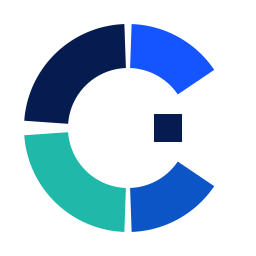
The Certavant Calibrated C mark: four segments around a central square

The mark is the product, drawn.

Our logo is the Calibrated C — a letter C built from four segments around a single square.

  • The four segments are the four levels of the credential ladder, CAI-1 through CAI-4.
  • The square at the centre is the evidence point: inspectable, graded work at the heart of every credential.
  • The open side represents a vendor-neutral standard, not a walled garden.

There’s no brain, circuit board, sparkle, or graduation cap. Those decorate the idea of intelligence. Our mark stands for something you can check.

A certification company doing the unglamorous parts properly.

Certavant is early, and we’d rather be straight with you than pretend otherwise. We’re a small company betting that the boring, rigorous parts of certification are exactly the parts the AI-credential rush skipped: published exam blueprints, real psychometrics, a named human accountable for every decision, and a right to appeal.

We’re building to the standards serious certification bodies use, and we publish our methodology and our results so you never have to take our word for it. That’s the work. We think it’s the only kind of AI credential worth holding — or hiring for.